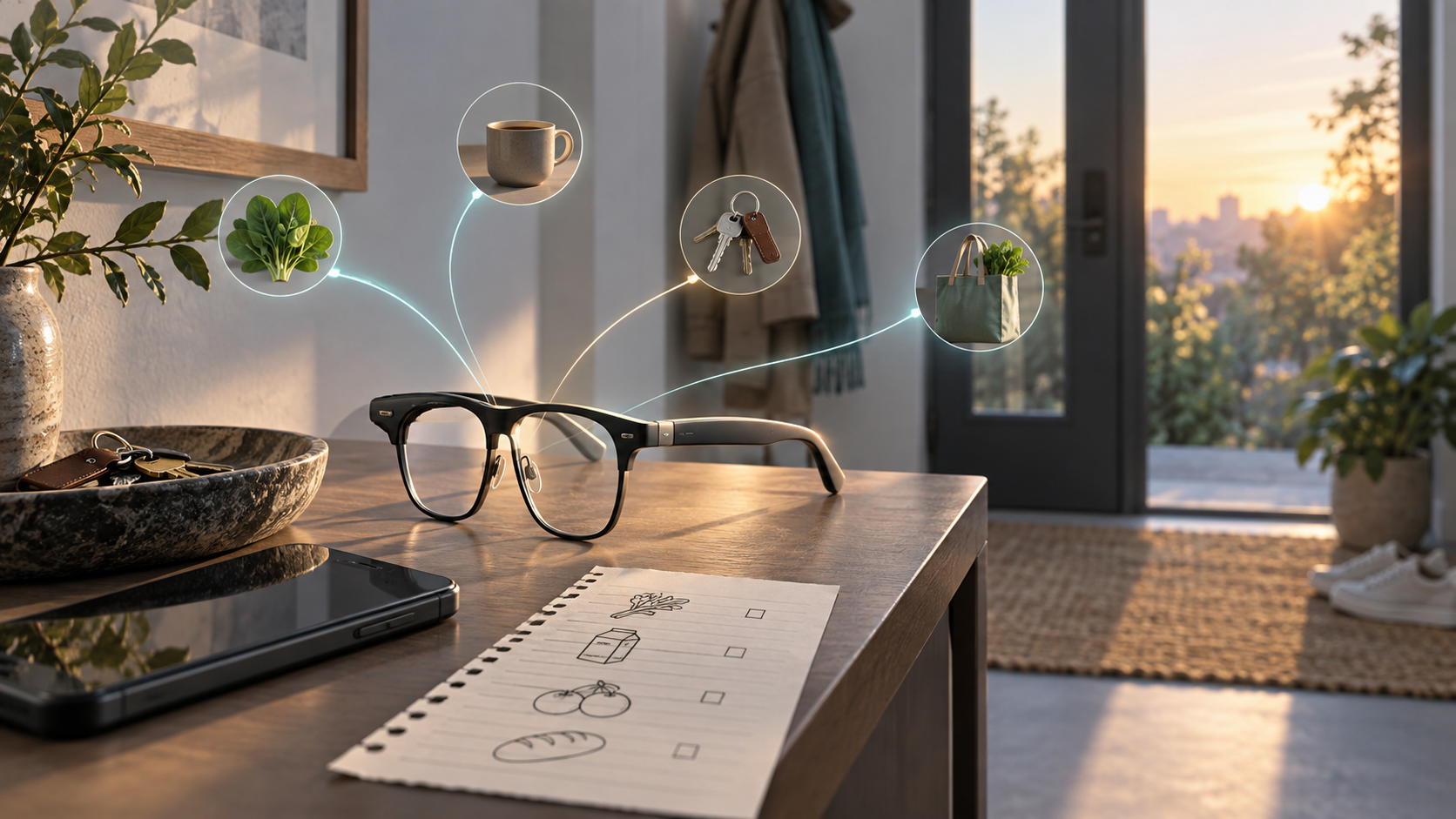
Meta says its Muse personal agent is coming to AI glasses. Instead of asking people to describe what is in front of them, the glasses will let Muse use the wearer’s visual context and take action on an object, sign, or shopping list.
At Connect 2026, Meta also announced a pair of VR glasses weighing about 100 grams, new audio glasses, and a third generation of Ray-Ban Meta glasses. The company says its range will exceed 100 AI-glasses styles by the end of 2026.
The announcement is a roadmap, not evidence from ordinary use. Muse on glasses is due in the coming months, and several other features have separate regional or device requirements. The practical tests will be whether the agent correctly understands what the wearer is looking at, asks before consequential actions, and makes its use visible to people nearby.
Claude found an enzyme pattern, then humans tested it
Anthropic introduced a life-sciences laboratory and described an early research result in which Claude searched DNA data for unusual patterns. The model identified a previously uncharacterized system, called ART, that combines an enzyme, a partner gene, and a long array of evenly spaced repeats.
The pattern resembles part of CRISPR systems. Anthropic’s laboratory reports that the repeat array is expressed as distinct short RNAs, confirming that the pattern is biologically active. The company has not established what ART does, whether it can be programmed, or whether it has a medical use. The result is an early technical report from Anthropic, not yet a settled discovery replicated by independent laboratories.
Google tries to keep long generated videos coherent
Google Research published a system for automating longer video generation across multiple shots. It separates story planning from shot creation, then uses information from earlier frames and scenes to reduce abrupt changes in subjects, settings, and narrative.
The work addresses a familiar weakness of generated video: a convincing short clip can lose identity and continuity when extended. The paper reports stronger automated and human evaluations than comparison methods in its test setup. It does not show that open-ended productions can reliably preserve characters, causality, and editing intent over a full film.
Microsoft combines task delegation, app building, and automation
Microsoft announced a new Copilot organized around Home, Code, and Autopilot. Home brings chat and longer-running delegated work into one place. Code lets people create internal apps and automations with natural language, using technology related to GitHub Copilot. Autopilot is intended to run repeatable processes.
The release is staged. Home and Code are rolling out gradually through the Microsoft Frontier program, while Autopilot is expanding to a private preview. Word, Excel, and PowerPoint are also being integrated into Copilot. The announcement establishes Microsoft’s product direction, not the reliability or labor saved in typical organizations.
Premiere arrives on Android
Adobe released Premiere for Android as a free mobile video editor for devices running Android 13 or later with at least 5GB of RAM. It brings a multi-track timeline, audio controls, captions, and assisted creative tools to phones, with paid generative credits available for some Firefly features.
Mobile availability can lower the equipment barrier for editing, especially for creators who work mainly from a phone. Adobe’s launch post does not establish how the app performs across lower-cost devices or whether its AI features improve finished work. Those questions require device testing and creator results.
AI glasses add optional hearing enhancement
Meta also announced FDA-cleared hearing-enhancement software for supported AI glasses in the United States. It is intended for adults who perceive mild to moderate hearing loss and will cost $149.99 or be included with Meta One on eligible devices.
The feature can be set up at home, according to Meta. It is not a diagnosis, does not cover every type of hearing loss, and has not yet produced independent evidence about long-term everyday use. The release nevertheless shows how a fashion and camera product is moving into a regulated health-adjacent role.
UNESCO turns AI ethics principles into three policy tools
UNESCO launched an updated Readiness Assessment Methodology, a global analysis of findings from national assessments, and a toolkit for AI’s environmental footprint. RAM 2.0 adds more explicit input from women, people with disabilities, and Indigenous peoples.
The tools help governments identify policy gaps and compare governance needs. They do not show that a country has adopted, funded, or enforced the recommendations. Implementation records will matter more than the number of frameworks published.
Google’s ad agent answers questions beside YouTube videos
Google opened sign-ups for Business Agent for YouTube Ads. The feature lets a viewer ask product questions beside a video ad without leaving the viewing context. Google also announced one-tap routes from Shorts and Gmail image ads to advertiser pages.
This is an advertiser product announcement. It does not establish whether conversational ads improve purchase decisions or make sponsorship easier to recognize. As ads become interactive agents, clear identity, data boundaries, and approval before a purchase matter as much as answer quality.
This week’s releases put AI into objects, laboratories, creative timelines, and business workflows. The useful distinction is simple: an announcement can prove that a company built and plans to ship something. It takes independent use, replication, and time to show what the change can be trusted to do.
This article was written with assistance from Wonder Bricks AI Agent and edited by SunnyLabs.