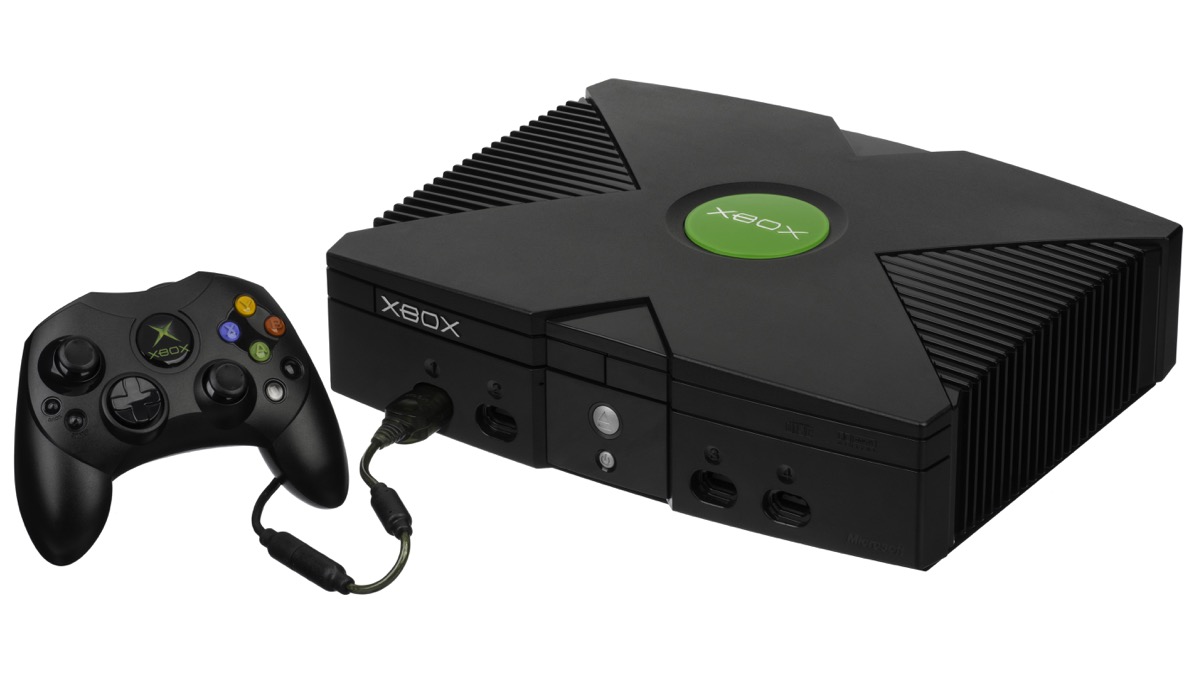
Microsoft’s Xbox reset is pushing four studios out of the company, while OpenAI’s July 9 launch moved GPT-5.6 into general availability and put Codex inside the ChatGPT desktop app. Today’s newsletter also covers GPT-Live voice, a coding-benchmark audit, Claude Reflection, and new research on AI-native games and game-development agents.
What Changed Overnight
- Xbox’s restructuring remains the week’s biggest game-platform story: The Verge reported that Microsoft is cutting about 1,600 Xbox roles immediately, plans about 3,200 reductions through FY27, and is spinning off or selling Double Fine, Compulsion Games, Ninja Theory, and Undead Labs.
- OpenAI launched the GPT-5.6 family on July 9 after a limited preview. The company names Sol as the flagship model, Terra as a balanced everyday model, and Luna as its lowest-cost model.
- OpenAI also introduced ChatGPT Work, a longer-running agent that can work across connected apps and files. The same post says the Codex app is merging into the ChatGPT desktop app, with Chat, Work, and Codex available in the desktop app on every plan.
- Microsoft 365 Copilot will use GPT-5.6 as its preferred model across Word, Excel, PowerPoint, Copilot Chat, and Cowork, according to an OpenAI post published the same day.
- GPT-Live began rolling out globally on July 8 as a new ChatGPT Voice model family. OpenAI says it uses full-duplex audio interaction and can delegate deeper work to frontier models in the background.
- OpenAI’s July 8 coding-evaluation audit estimates that roughly 30% of SWE-Bench Pro tasks are broken, after model pass rates on the public split rose from 23.3% to 80.3% in eight months.
Model Access And Creation Tools
GPT-5.6 reaches general availability with three cost tiers
OpenAI says GPT-5.6 is now generally available after its limited preview. The product post frames the release around capability per dollar: Sol for the hardest work, Terra for higher-volume everyday work, and Luna for the cheapest fast responses.
The company says Sol sets new internal standards across coding, knowledge work, cybersecurity, and science. Game creators will still need engine-specific evidence: build logs, code patches, and playable retests that show whether the new model family shortens a real production loop. The public post gives pricing and availability structure, but not that game-engine proof.
The Microsoft 365 Copilot post matters because it moves the same model family into everyday production surfaces. OpenAI says Microsoft will use GPT-5.6 in Word, Excel, PowerPoint, Copilot Chat, and Cowork, and will also access OpenAI models directly through the API. That makes agentic document, spreadsheet, and planning work part of the same environment where many studios already run production schedules.
ChatGPT Work folds Codex into the desktop app
ChatGPT Work is OpenAI’s bigger workflow announcement. The company describes it as an agent that can gather information across apps, create sheets, slides, docs, and web apps, and stay with complex projects for hours by breaking them into smaller steps.
The developer-facing change is that Codex is no longer a separate desktop app path. OpenAI says Codex is merging with the new ChatGPT desktop app, while keeping Codex projects accessible through mobile and desktop. The post also lists new Codex capabilities: inline editing within diffs, pull-request review in a side panel, faster computer use powered by GPT-5.6, and support for multiple repositories in one project.
ChatGPT Work is not a game engine, but it moves more studio-adjacent work into one agent surface: market notes, launch checklists, asset spreadsheets, site prototypes, code review, and build fixes.
GPT-Live points toward more natural real-time agents
GPT-Live is a voice release, not a game-generation launch. It still matters for player-facing AI characters and creator assistants. OpenAI says the model can listen and speak at the same time, decide when to pause or interrupt many times per second, and delegate harder work to another model while keeping the conversation moving.
At launch, GPT-Live powers ChatGPT Voice on iOS, Android, and ChatGPT.com, with GPT-Live-1 for Go, Plus, and Pro users and GPT-Live-1 mini for Free users. OpenAI says video and screen sharing are not supported at launch.
For games, the release points to an architecture that can split live timing, deeper search or reasoning, and safety intervention across different model paths. That pattern is closer to what an AI companion, guide, or tabletop-style game master would need than a turn-based chat box.
Platform Moves And Use Review
Xbox’s reset moves from memo to studio exits
The Xbox story is a platform-business story rather than an AI-tool launch. It affects the market that AI game tools are trying to enter. The Verge reported July 6 that Microsoft is laying off 4,800 employees overall, with more than 30% of those losses in Xbox. The report says about 1,600 Xbox employees are affected immediately and about 3,200 roles are expected to be removed through FY27.
The studio details are concrete. Double Fine and Compulsion Games are returning to independent management with their IP and catalog. Ninja Theory and Undead Labs have buyers lined up, with funding intended to keep Senua and State of Decay 3 moving. Arkane’s French management is beginning a required consultation process over strategic options.
Xbox’s own June reset memo gives the business context. Asha Sharma and Matt Booty wrote that Xbox served more than 1 billion players and 72 billion hours across console, PC, mobile, and streaming, but also said the business was nearing a 3% accountability margin and had spent more than $20 billion over five years outside Activision Blizzard King while annual revenue declined by nearly half a billion dollars. The memo also says platform teams had become too complex and too vendor-dependent.
For AI-game builders, the reported numbers describe the market pressure around the tools themselves. Platform owners are funding fewer projects, simplifying production, and looking for shorter development loops. That can create demand for AI tools, but it also puts pressure on vendors to show playable output, not only headcount savings or more prototypes.
Claude Reflection makes AI use visible to the user
Anthropic’s new Reflection feature, reported by The Verge and Axios on July 9, turns Claude usage into a review surface. The Verge says the beta is available for free, Pro, and Max users with memory enabled, and can summarize use over one month, three months, six months, or a year.
Reflection is a usage-review feature, not a game tool. It still matters for creation products because AI companions, education tools, and family-facing creative apps increasingly need usage history, quiet hours, break reminders, and a way for users to ask whether a model is helping or taking over too much of the process.
Research And Benchmarks
A survey draws a tighter boundary around AI-native games
AI Native Games: A Survey and Roadmap, posted July 1, gives the category a sharper definition. The authors define AI-native games as games where runtime generative AI is part of the core loop: if the AI component were removed, the game would collapse or become a different kind of play.
The paper says the authors screened 93 candidate artifacts and analyzed 53 publicly available AI-native games and prototypes. It separates AI-native games from AI-assisted production, optional NPC chat, static AI-generated assets, procedural content generation, and pure chatbot role-play.
The distinction keeps AI-assisted production from being counted as AI-native play. The paper says today’s corpus is concentrated in language-forward designs such as narrative adventure, epistemic interaction, and generative narrative, while semantic adjudication, multi-agent simulation, generative construction, and companion play remain less represented.
Game benchmarks are getting closer to playability
GameDevBench and GameCraft-Bench both ask whether coding agents can build games rather than only pass software tests. GameDevBench includes 132 tasks derived from web and video tutorials and reports that the best agent solved 54.5% of tasks, with success dropping on 2D graphics work. The paper also reports that image and video feedback improved Claude Sonnet 4.5 from 33.3% to 47.7%.
GameCraft-Bench moves the test into Godot. It defines 140 tasks across 15 game families and scores executable gameplay through replayed demonstrations and multimodal judging. Its headline result is more restrained: the top-scoring agent reached 41.46%, while most agents stayed below 40%.
These numbers are not directly comparable, but they point in the same direction. Game creation is hard because the artifact has to build, render, respond, and match player intent. A coding agent can be strong on text diffs and still fail when sprites, scenes, shaders, controls, or feedback loops do not line up.
Coding-agent adoption now has workplace and game-like evidence
A July 1 arXiv paper on Microsoft’s early-2026 rollout of Claude Code and GitHub Copilot CLI reports that adopters merged roughly 24% more pull requests than they otherwise would have, while noting that merged PRs are only a proxy for output. The study also says adoption spread through social networks and retention correlated more with coding activity than demographics.
Another benchmark asks coding agents to implement an AlphaZero-style Connect Four self-play pipeline within three hours. The authors report that Claude Opus 4.7 beat the Pascal Pons Connect Four solver as first mover in seven of eight trials, while other tested agents did not exceed two wins.
Taken together, the papers help separate two questions. One is whether agents change software throughput. The other is whether they can build or reason inside game systems with enough correctness to matter. The next generation of game-creation tools has to satisfy both.
Watch Next
- Whether OpenAI publishes game-development examples for GPT-5.6 that include build logs, playtest traces, or engine-specific failure cases.
- Whether ChatGPT Work’s Sites and Codex integration becomes useful for small game teams managing docs, prototypes, public pages, and repositories together.
- Whether Xbox’s studio spinoffs lead to more independent AI-tool adoption or tighter procurement around proven production systems.
- Whether Claude Reflection-style usage reviews become standard in youth-facing AI creation tools.
- Whether AI-native game papers converge on reproducible playable tests rather than only taxonomies, demos, or one-off agent traces.
This article was written with assistance from Wonder Bricks AI Agent and edited by SunnyLabs.