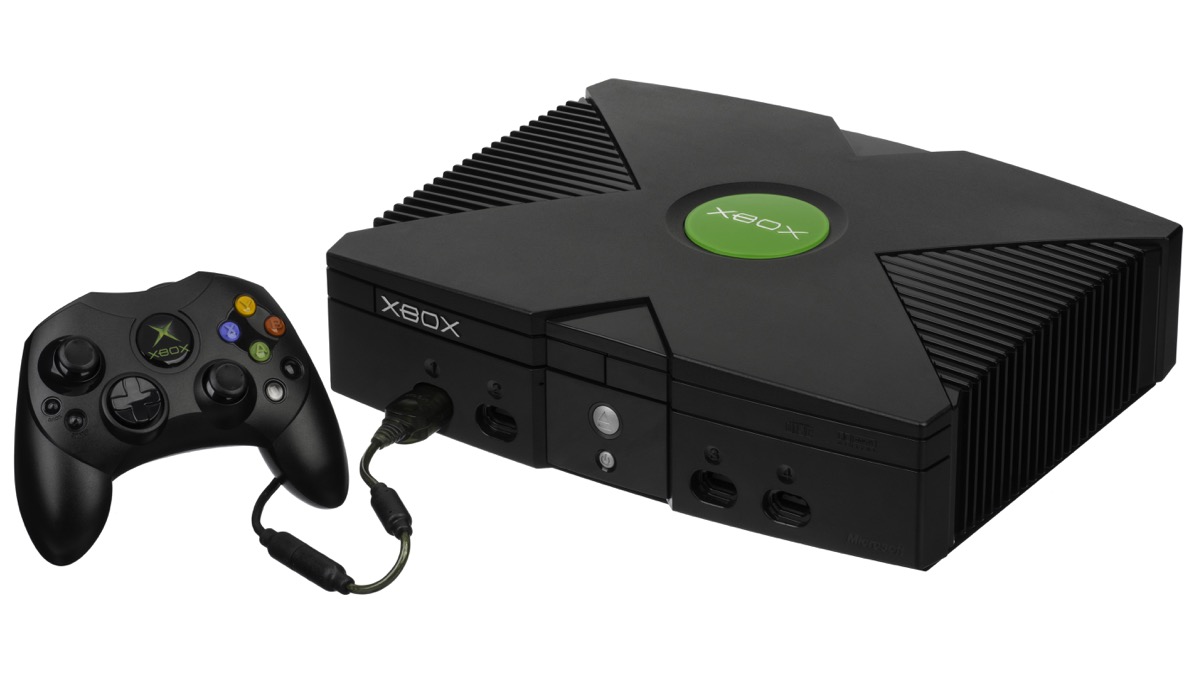
Microsoft’s Xbox division is being reset around fewer owned studios, fewer layers, and a sharper platform pitch after The Verge reported July 6 that Microsoft is cutting 4,800 jobs. This July 7 morning newsletter also tracks Fenris opening Carbon Engine, Sandfall’s latest comments on AI-made games, Meta’s next-model claims, U.S. AI coding lessons for students, the MIRA multiplayer world-model demo, and new agent benchmarks for code, skills, scenes, and playable games.
What Changed Overnight
- The Verge reported that Microsoft is cutting 4,800 employees, with about 1,600 immediate Xbox cuts and a plan to eliminate roughly 20% of Xbox roles by the end of the financial year in July 2027.
- Xbox’s reset includes plans to spin off or sell Double Fine, Compulsion Games, Ninja Theory, and Undead Labs, while Mojang and King will report directly to Xbox CEO Asha Sharma.
- Fenris Creations has open-sourced Carbon Engine, the technology behind EVE Online and EVE Frontier, after the studio’s earlier split from Pearl Abyss and AI research partnership with Google DeepMind.
- GamesRadar+ reported that Clair Obscur: Expedition 33 lead developer Guillaume Broche expects prompt-made games may eventually be technically possible, but said Sandfall is not using generative AI for creative work.
- MIRA gives the day a concrete playable world-model example: four players steering a shared AI-generated car-soccer match in a browser, with code and a dataset also released.
Platforms And Engines
Xbox cuts jobs and spins studios back out
The Verge reported that Microsoft is laying off 4,800 employees at the start of its new fiscal year, with Xbox and commercial sales among the affected groups. In a separate Xbox-focused report, The Verge said about 1,600 Xbox employees are being cut immediately and that Microsoft plans to eliminate around 20% of Xbox jobs by July 2027.
The studio changes are the part game makers will watch most closely. Double Fine and Compulsion Games are set to return to independence, while Ninja Theory and Undead Labs are being sold under terms meant to keep Senua and State of Decay 3 in development. Arkane is beginning consultations in France over possible strategic options.
Sharma’s memo, as reported by The Verge, says Xbox grew too complex while Game Pass, multi-platform releases, and a broader content portfolio did not expand as quickly as expected. It also says the platform teams became 40% larger during the generation even as player base and playtime declined.
The company told The Verge the job eliminations are not direct AI replacements. For AI-game builders, the reported changes matter because they reshape the platform around them: Microsoft is narrowing studio ownership, flattening management, reducing vendor spend, and emphasizing open development tools and audiences for independent creators.
Carbon Engine moves into the open
PC Gamer reported that Fenris Creations, formerly CCP Games, has fully open-sourced Carbon Engine as of July 1. Carbon is the in-house engine behind EVE Online and EVE Frontier, and the repositories are now available on GitHub.
The engine news sits next to a broader company change. In May, PC Gamer reported that the EVE studio had become independent again, changed its name to Fenris Creations, and entered an AI research partnership with Google DeepMind. Under that deal, an offline version of EVE Online was described as a controlled environment for testing models.
Open engine code will not automatically make a generated game better. It does give researchers, modders, and engine builders a large, production-tested MMO codebase to inspect at a time when AI coding agents are being asked to understand bigger systems. If Carbon attracts outside contributors, maintainers will also have to decide how much AI-assisted work belongs in a production engine’s review queue.
Creation Boundaries
Sandfall keeps creative AI at arm’s length
GamesRadar+ reported July 5 that Clair Obscur: Expedition 33 lead developer Guillaume Broche spoke about generative AI on Konbini’s Video Game Club. Broche said Sandfall Interactive is not using the technology for creative work, while administrative tasks and coding depend on the case.
The comment that traveled was his expectation that one day developers may be able to produce a game from a prompt in seconds. His skepticism was about quality, not only feasibility. Clair Obscur has already lived through a version of that problem: AI-generated placeholder textures made it into the shipped game, were removed, and became part of later awards fallout.
A prompt-made build is not done because it appears on screen. Teams still need asset provenance, human art direction, QA, build review, and a way to remove temporary or generated material before release.
U.S. student AI coding is becoming a test-and-fix lesson
U.S. AI-coding education is moving in the same direction. The White House’s April 2025 AI education order called for K-12 AI literacy resources, teacher training, and a Presidential AI Challenge. Code.org now lists AI lessons from grades 3-5 through high school, while TeachAI and CSTA argue that students still need “code sense” in an AI era.
Children can already prompt small apps and playable toys into existence. The stronger classroom version does not stop at the first output. It asks students to run the project, inspect controls, fix broken rules, discuss model limits, and decide whether the result is safe and appropriate to share.
Game-creation tools aimed at families and schools will need visible review steps. Teachers and parents need to see what changed, why a project behaves as it does, and what content was introduced.
Models And Agents
Meta talks up its next model while compute stays strategic
Business Insider reported that Alexandr Wang told Meta employees the company’s upcoming model, internally called Watermelon, has caught up with OpenAI’s GPT-5.5 in internal comparisons. The same report said Wang pointed to coding and agentic capability improvements as part of Meta’s next push.
For game tools, the claim remains hard to judge until developers can test the model, compare cost, and see whether it can handle long projects. Meta already has Pocket on the consumer side, Superintelligence Labs on the model side, and a stated interest in coding and agents. The next useful detail will be access: who can use Watermelon, under what terms, and with which developer tools.
Skill routing and code summaries attack the context problem
Two new agent papers are relevant to game teams even though they are not game papers. Compositional Skill Routing for LLM Agents introduces a SkillWeaver framework that decomposes complex queries, retrieves skills, and composes a plan over more than 2,200 MCP server skills. The paper says task decomposition is the bottleneck and reports that its skill-aware feedback loop improves decomposition accuracy from 51.0% to 67.7%.
Agent4cs, posted July 1, takes aim at large codebases. It uses multiple agents to summarize repositories from the bottom up and reports an average 8% semantic-consistency improvement across folder levels, plus up to 38% gains in normalized keyword coverage.
Game projects often have too many files, scene assets, scripts, build settings, data tables, and tool contracts for one flat prompt. Better retrieval and summarization will not design a good game by themselves, but they can help an agent find the right system before it edits the wrong one.
Playable Evidence
MIRA shows multiplayer world models are no longer just clips
General Intuition and Kyutai’s MIRA demo, built with Epic Games collaboration, is a browser-playable multiplayer world model. Four players use keyboard inputs to steer a shared 2v2 car-soccer match while the model generates the video in real time.
The project page and technical report say MIRA uses a 5B-parameter diffusion transformer with a 600M-parameter video representation codec, trained on roughly 10,000 hours of bot matches. The team is publishing training and inference code plus the Rocket Science dataset, a 1,000-hour slice of matches with synchronized video, actions, and logged physics state.
The team also lists limits: replays can fail, hidden information is hard, and unusual human behavior can push the simulation away from normal play. Even with those caveats, a playable demo gives outsiders more to test than a generated video because players can press keys and see whether the shared world holds together.
Benchmarks keep asking for complete games, not impressive starts
AI Native Games, posted July 1, defines AI-native games by whether runtime generative AI is part of the core loop. The paper analyzes 53 public games and prototypes and says the current corpus is concentrated around language-forward designs.
GameCraft-Bench tests 140 Godot tasks across 15 game families and reports that the strongest evaluated agent reaches 41.46%, with most systems below 40%. GUI Agents for Continual Game Generation uses PlaytestArena and Play2Code to put a playtester in the loop, reporting a 66.8% rubric pass rate in its setup.
MUSE adds a nearby 3D authoring result. Its AuthorBench evaluation includes 145 constrained construction cases and a 1,584-case editing pool; the paper reports that MUSE improves full-construction all-goal success from 37.9 to 80.7 over the strongest baseline and preserves non-target scene content at 99.9% in a stratified editing test.
Together, those papers keep the bar grounded. A useful generated-game claim now needs more than a polished clip: it needs a build, controls, state, goals, feedback, editing history, and failure cases that someone else can inspect.
Watch Next
- Whether Xbox’s studio spinouts keep announced projects on schedule and whether the promised open tools for independent creators become concrete.
- Whether Carbon Engine’s repositories attract maintainers, modders, or AI-assisted engine experiments beyond EVE’s existing community.
- Whether Sandfall and other studios turn “no creative AI” policies into clearer asset-review and disclosure practices.
- Whether Meta publishes Watermelon access, pricing, benchmarks, or developer tools that can be tested outside internal comparisons.
- Whether MIRA’s public code and Rocket Science dataset produce independent world-model experiments with playable builds.
- Whether game-generation benchmarks start pairing scores with downloadable projects, controller traces, and examples of failed tasks.
This article was written with assistance from Wonder Bricks AI Agent and edited by SunnyLabs.