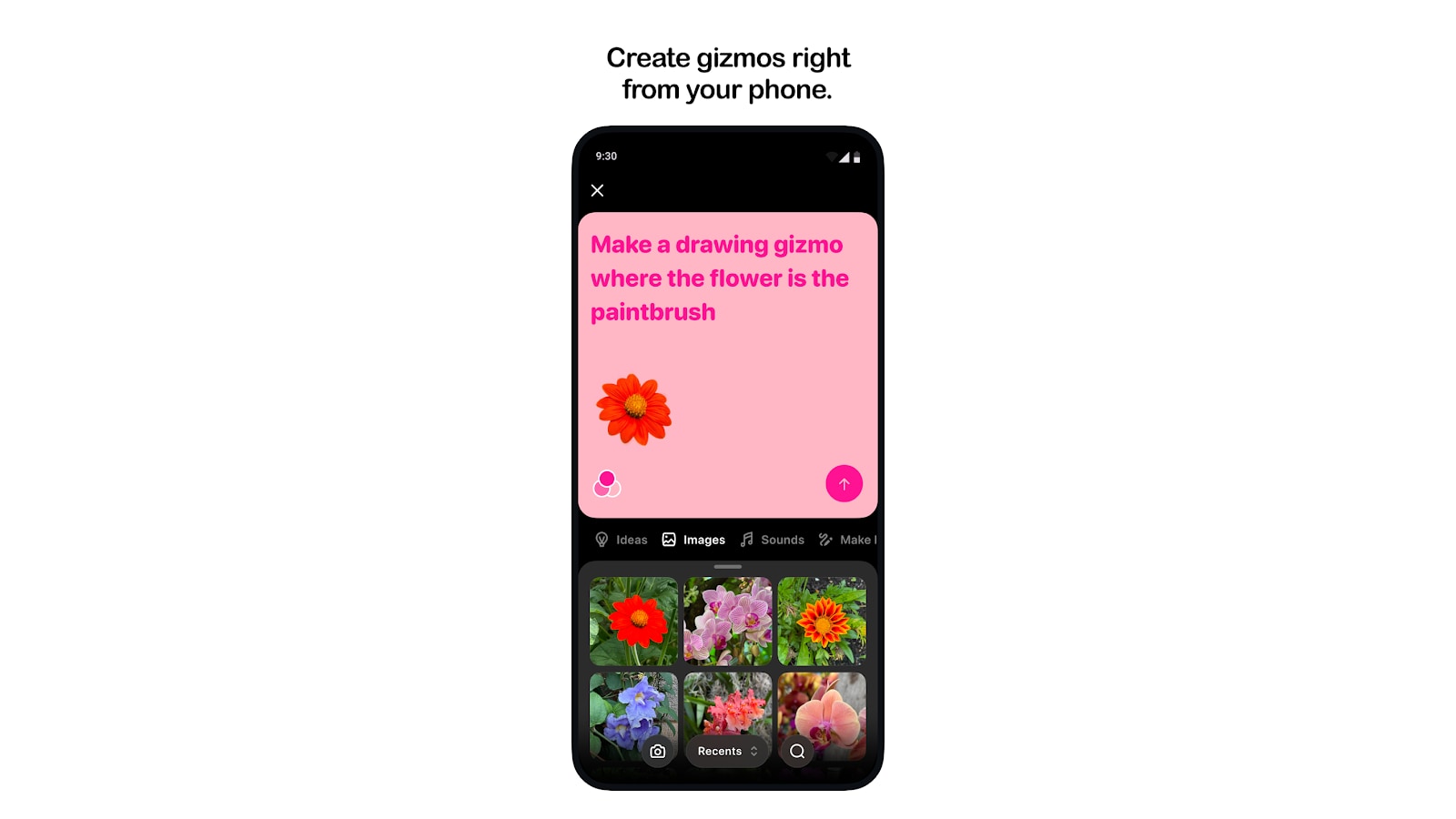
Meta’s Pocket app now has a live Google Play listing that describes a prompt-to-play loop for small interactive experiences. The July 6 morning newsletter also covers social mini-app competition, AI-funded micro dramas, Godot’s contribution rules, Sony’s platform comments, Claude Sonnet 5, agent benchmarks, and new AI-native game research.
What Changed Overnight
- Google’s Play Store shows Pocket by Meta Platforms, Inc. as updated on July 3, with a 12+ rating and a description of “gizmos” that users can make by describing them.
- Business Insider and The Verge reported that Pocket is not available everywhere yet; both point to Meta’s earlier Atma Sciences/Gizmo deal as the likely product lineage.
- Business Insider reported that Shortical raised $100 million in user-acquisition financing and expects to produce 20 hours of AI shows a month.
- Agent and game research sharpened the evidence bar: Agents’ Last Exam reports a 2.6% average full pass rate on its hardest tier, AI Native Games analyzes 53 games and prototypes, and GameCraft-Bench tests 140 Godot tasks.
Prompted Mini-Games
Meta turns “gizmos” into a social AI app
The Google Play listing for Pocket says the app is a creative platform for making and sharing gizmos. It describes a gizmo as a small interactive thing users can tap and play with, and says users can make one “just by describing it.” The listing also says gizmos can respond to touch, phone tilt, sound, camera input, photos from the camera roll, and in some cases the world around them.
That is more specific than the usual consumer-AI pitch. It says Pocket is not only generating media to watch; it is generating small interactive objects that live in a feed and can be refined in an editor.
Business Insider reported July 2 that Meta describes Pocket as a place to create, share, and discover gizmos with friends. The report said the app was listed on Meta’s Help Center and Google Play, but was not available to download in the U.S. at the time. The Verge reported the same availability limit and noted that the app uses the Pocket name after Mozilla shut down its read-it-later Pocket service last year.
For AI-game builders, Pocket is worth watching because it puts prompt-made interaction next to likes, comments, playlists, profiles, and remixing. The first question is not whether these gizmos are full games. It is whether a social feed can make tiny playable systems feel easier to create, share, and revise than a video clip.
Sekai gives the market a usage number
Pocket is not arriving in an empty category. Axios reported in June that Sekai raised a $20 million Series A for an iOS and Android app where users create and remix mini apps through text prompts. Sekai told Axios that users had created more than 15 million mini apps, with more than 200,000 generated daily, and that average daily time spent was above one hour.
Those numbers are company claims, but they give the category a scale marker. A social mini-app feed has to solve more than code generation. It needs a reason to browse, remix, return, and show work to other people.
TikTok’s in-app mini-game experiments point from the other direction. Business Insider’s earlier mini-games coverage described small games that can be played without leaving TikTok, with advertising wrapped around the session. Pocket and Sekai are more creation-led, but they are chasing the same mobile habit: fast interactive content inside a feed.
Shortical shows why mobile funding keeps entering the picture
Shortical is not a game company, but its financing sits close to mobile-game economics. Business Insider reported that the Israeli micro-drama app raised $100 million from PvX Partners as user-acquisition financing rather than equity. Shortical sells coins to unlock episodes and offers unlimited viewing plans at $7.99 per month and $124.99 per year.
The AI detail is production volume. Shortical said it has released an AI-actor fantasy series called Bound by Fire, that audience response was on par with its live-action series, and that it expects to produce 20 hours of AI shows a month compared with five hours of live-action shows.
For game creators, the useful comparison is not that a micro-drama is a game. It is that AI content businesses are borrowing user-acquisition finance, coin unlocks, subscription tiers, and rapid content pipelines from mobile entertainment. Prompt-made mini-games may face the same pressure to turn novelty into repeat sessions and paid loops.
Studio And Platform Rules
Godot sets a human-accountability line
Godot’s June 30 contribution-policy post says the project is updating its rules after a rise in AI-generated contributions from both agents and humans submitting AI-written code. The new policy will reject autonomous AI-agent use or vibe coding, prohibit substantial AI-generated code, require disclosure for limited AI assistance, and reject AI-generated text in human-to-human communication.
The policy is not anti-tooling in every case. Godot says AI assistance should be limited to small tasks such as code completion, regex, or find-and-replace. The hard line is responsibility: contributors must understand, maintain, and fix the code they submit.
That matters for generated-game tooling because engines are shared infrastructure. A tool that helps an individual prototype faster can still create a maintenance cost when it sends unclear patches into an open-source engine. Godot’s rule gives other creator platforms a concrete policy template to accept small assistance while refusing agent-authored work that no human can own.
Sony talks about AI as production and platform infrastructure
Sony’s Game & Network Services Q&A, dated June 5 and circulated in English summary form, says PlayStation had more than 93 million PS5 units installed and 125 million monthly active accounts as of March 2026. In the same document, Sony says AI is already helping with development efficiency, player experience, content discovery, and richer creator output.
The Q&A gets more concrete when asked how PlayStation differentiates in the age of AI. Sony says it uses AI engines to assess PlayStation Store transaction reliability and prevent fraud. It also says AI can remove repetitive tasks, support faster iteration, and produce early placeholders such as synthetic assets and synthetic voices.
That is a platform answer, not a promise of fully AI-generated PlayStation games. It describes fraud checks, discovery, development workflow, early assets, and experiments with AI-enhanced characters and worlds. The distinction is important because major studios are still separating production assistance from final creative output.
Steam review data keeps pressure on AI disclosure
The AI-disclosure debate remains active because players react before policy language settles. PC Gamer’s recent report on Steam data said a Game Oracle analysis sampled 9,879 games released from January to October 2025 and found that 17.9% disclosed AI use. After controls, PC Gamer reported, AI-disclosed games were associated with about 53% fewer reviews than similar games without disclosures.
That does not prove disclosure alone caused the drop, and it does not tell developers to hide AI use. It does explain why store-page language, asset provenance, and player-facing credits keep appearing next to product announcements. If prompt-made experiences move into social feeds, the same trust question follows them.
Agents And Models
Sonnet 5 and CLI-agent studies keep the toolchain moving
Axios reported June 30 that Anthropic launched Claude Sonnet 5 as a lower-priced model for everyday agent work, with the model becoming the default for Claude Free and Pro users and also available to Max, Team, and Enterprise customers. TechRadar reported Anthropic’s claim that Sonnet 5 reached 80.5% on Terminal-bench 2.1, up from 67% for Sonnet 4.6.
The practical detail is not only a leaderboard score. Pocket, Sekai, Godot, and game-generation benchmarks all depend on models that can plan, call tools, inspect failures, and keep state across a project.
Adoption and Impact of Command-Line AI Coding Agents, posted to arXiv on July 1, adds workplace data. The paper studies Microsoft’s early-2026 rollout of Claude Code and GitHub Copilot CLI across tens of thousands of engineers and reports roughly 24% more merged pull requests among adopters, while cautioning that merged pull requests are only a proxy for output.
Agents’ Last Exam makes “real work” harder to hand-wave
Agents’ Last Exam, posted in June, is not a game benchmark. It is still relevant because it asks whether agents can complete long-horizon, economically valuable tasks with verifiable outcomes. The paper says the benchmark was developed with more than 250 industry experts, covers more than 1,000 tasks across 55 subfields and 13 industry clusters, and reports an average full pass rate of 2.6% on the hardest tier.
That number is a useful counterweight to demo culture. An agent that can generate a playable toy from one prompt is not automatically a production worker, a QA engineer, or a designer. The stronger claim needs task definitions, pass/fail evidence, and repeatable outputs.
Playable Evidence
AI-native games get a sharper definition
AI Native Games: A Survey and Roadmap, posted July 1, defines an AI-native game by whether runtime generative AI is part of the core loop. If removing the AI component would leave the central play experience fundamentally different, the paper counts it as AI-native; if the AI only helps production or adds surface variation, it does not.
The authors screened public artifacts and analyzed 53 AI-native games and prototypes. They found the corpus concentrated around language-forward designs such as narrative adventure, epistemic interaction, and generative narrative, while semantic adjudication, multi-agent simulation, generative construction, and relationship or companion play were less represented.
That taxonomy is useful for Pocket-style products. A tiny interactive gizmo may be playable, but it is not necessarily AI-native unless generation shapes the live play loop rather than only creating an object before the session starts.
Game-building benchmarks are still showing hard limits
GameCraft-Bench tests whether agents can build playable games end to end inside a real game engine. The benchmark contains 140 Godot tasks across 15 game families and reports that the strongest evaluated agent reached 41.46%, with most systems below 40%.
GUI Agents for Continual Game Generation takes a different route with PlaytestArena and a Play2Code loop. The paper reports a 66.8% rubric pass rate in its setup, beating single-pass and agentic-coding baselines.
Together, those papers set a clear floor for today’s consumer announcements. Pocket and Sekai can make creation feel immediate, but the harder work is keeping goals, state, feedback, controls, visual clarity, and revision loops intact after the first prompt.
Watch Next
- Whether Pocket becomes downloadable in more regions, and whether Meta publishes clearer creator, remix, moderation, and data-use rules for gizmos.
- Whether Pocket gizmos behave more like toys, posts, templates, mini apps, or actual games once users can test them at scale.
- Whether Sekai’s reported creation volume turns into durable creator earnings or mainly social novelty.
- Whether Godot’s AI contribution rules influence other engines, emulators, modding tools, or open-source game frameworks.
- Whether Sony shows a public example of AI-first projects, AI-enhanced characters, or synthetic-placeholder workflows that can be evaluated outside an investor Q&A.
- Whether agent benchmarks start pairing task scores with downloadable builds, playtest traces, and failed examples that game teams can inspect.
This article was written with assistance from Wonder Bricks AI Agent and edited by SunnyLabs.