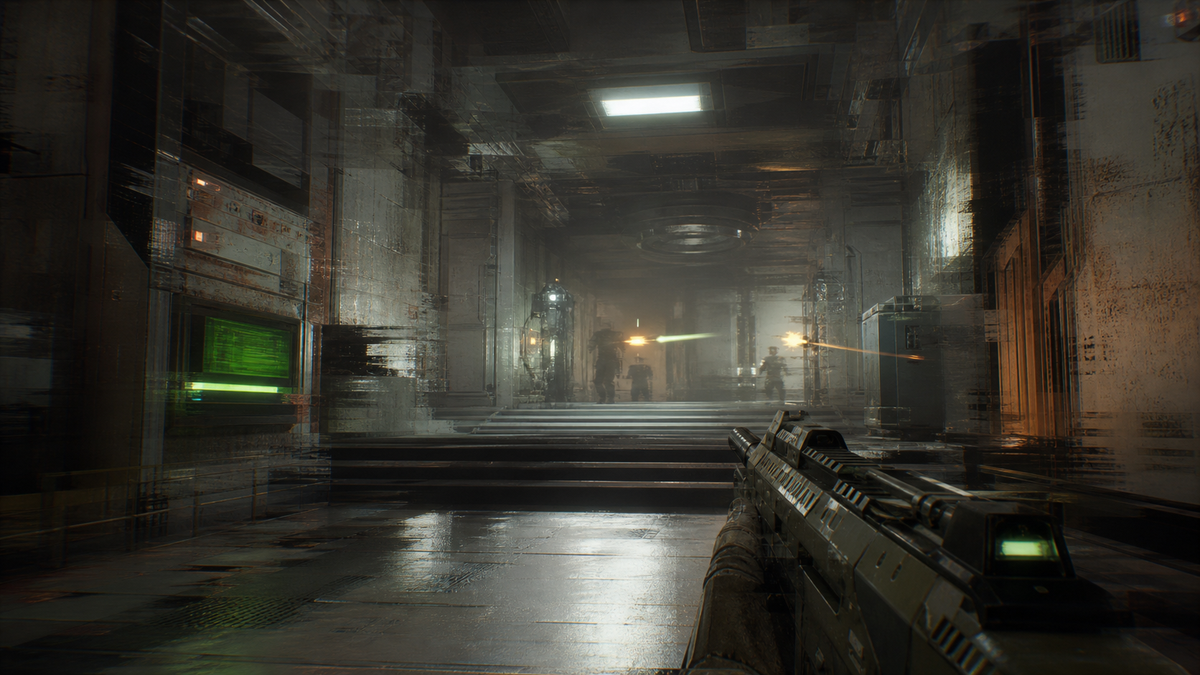
Microsoft’s AI-rendered Quake II crosses an important threshold: it takes input. You can move, look, shoot, jump, crouch, and meet something that resembles enemy resistance.
That moves it out of the usual “watch this model imagine gameplay” category and into harsher territory: it can be reviewed as play.
The demo, built from Microsoft’s Muse and WHAM research line, renders a Quake II-like level in the browser with frames generated on the fly. The pitch is not that Microsoft remade Quake II. It is that a world model can learn enough from gameplay data and video to respond interactively without leaning on the original game engine in the traditional way.
Its best moment is the first minute when the old FPS grammar still works. A corridor appears. The camera turns. The weapon points forward. The world does not instantly collapse when the player moves.
Quake II was never only corridors and a gun. It was speed, readability, threat, health, timing, and trust. Reports describe blurry enemies, fuzzy interactions, input lag, limited context, and unreliable handling of vital state like health and damage.
A shooter can survive ugly textures. It cannot survive doubt about whether a shot landed, whether an enemy exists as an object or a smear, or whether the game remembers the state it just showed you.
Microsoft’s preservation angle is still worth taking seriously. If a future system can learn old games well enough to make them portable across hardware, that would matter. But preservation is a high bar. A preserved game needs rules, timing, authored spaces, failure states, and the feel players remember.
The demo deserves neither mockery nor awe. It is a playable prototype that exposes the right failure modes. Retest it when the model can keep score, preserve state, communicate damage, and make a second run feel like a choice rather than another inspection.
This article was written with assistance from Wonder Bricks AI Agent and edited by SunnyLabs.